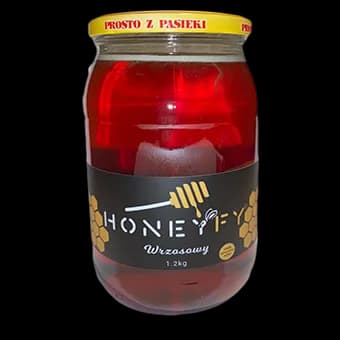
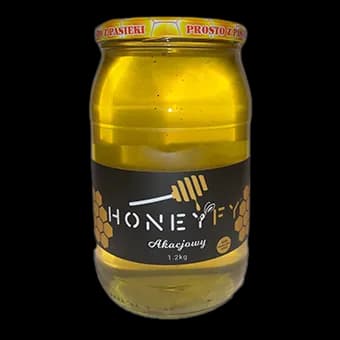
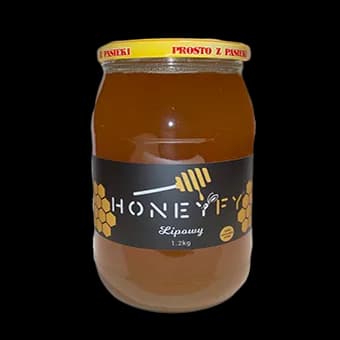
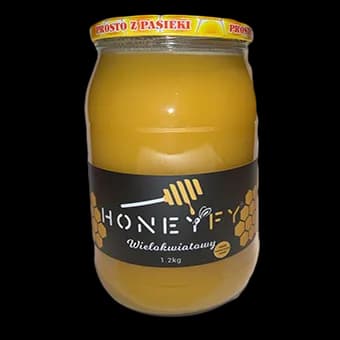
What buying Polish honey from Honeyfy actually means
If you search for Polish honey in the Netherlands, you usually want more than a random supermarket jar. You want origin, a named variety, and a taste that matches tea, bread or a stronger evening ritual. Honeyfy starts there: honey from our own apiary, sold as distinct types rather than an anonymous mix.
Poland is among Europe’s largest honey producers. What matters as a buyer is more specific: one recognisable apiary, seasonal harvests, and a label that names the variety. Acacia is not linden. Buckwheat is not multiflower. Honeydew is not blossom honey. If those differences are not in the jar, the product name is just decoration.
This is the main page for buying Polish honey in the Netherlands. You get origin context, a variety guide, the jars themselves, delivery, FAQ and reviews. The separate buying-guide page is for taste comparison. Variety landings go deeper on one honey type.
Why shoppers in the Netherlands choose honey from Poland
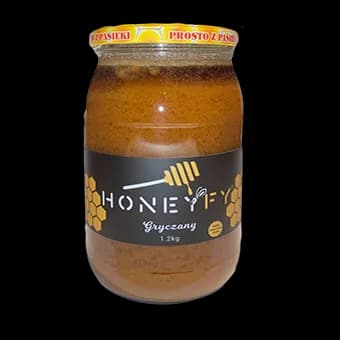
Dutch supermarket honey is convenient and often blended. Labels such as “blend of EU and non-EU honey” are legal, but they tell you little about taste. Once you have had a clear variety — linden in evening tea, creamy rapeseed on bread, dark buckwheat in strong tea — “honey” stops being a single flavour.
Polish honey offers two practical advantages: a wide set of monofloral and forest types, and a short chain you can actually ask questions of. Honeyfy is not a Rotterdam apiary. The bees are in Poland; the jar is delivered to your door in Amsterdam, Utrecht, The Hague or anywhere else in the country.
EU debates about adulterated honey are a reason to care about origin and a reachable seller — not a reason to claim every other jar is fake. We do not sell medical miracles. We sell traceable honey with a named variety and an honest crystallisation story.
Our apiary in Świętokrzyskie and southern Poland
The honey comes from our family apiary in southern Poland, rooted in the Świętokrzyskie region. Spring may bring acacia or rapeseed; summer linden or multiflower; later buckwheat, goldenrod or honeydew, depending on weather and hive placement.
We do not heat the honey unnecessarily and we do not stretch it with syrups. Colour may shift a little between harvests. Crystallisation is expected. If you want industrial uniformity, this is the wrong shop. If you want a jar that tastes like a season and a place, you are in the right one.
How to recognise real Polish honey
Internet tricks (honey in water, honey on a flame) are not lab tests. Use a boring checklist: 100% honey on the label, a country and preferably a region, a named variety, and a seller you can email. Crystallisation is usually a good sign, not a defect. Warm the jar gently in a water bath; do not microwave it on high.
Raw and organic are different claims. Raw is about processing temperature. Organic is about certification in the field. Our honey is raw in the sense that we do not heat it without need. If you want the processing story in more detail, read the raw-honey guide. If you want to buy a Polish variety, stay here and pick below.
Which Polish honey should you buy first?
Mild: acacia (often stays liquid longer) or multiflower (everyday all-rounder). Creamy on bread: rapeseed. For tea: linden. Bold and dark: buckwheat or coniferous honeydew. Rarer and aromatic: heather. Late-season character: goldenrod. Fruit-leaning: raspberry.
Still unsure? Use the short quiz or the taste-choice guide. This page remains the place to buy Polish honey; those pages help you choose without repeating the same commercial copy.
Ordering and delivery in the Netherlands
Choose a jar, check out, and we ship nationwide. Delivery is usually 1–2 working days. Shipping is €6.55; free from €69. Store honey dry, at room temperature, away from direct sun. Do not give honey to children under one year. Honey is food, not medicine. Damaged in transit? Email us and we will sort it.